

The table saw is often referred to as the heart of any woodworking shop, and for good reason. Its ability to make straight, accurate cuts with remarkable consistency makes it indispensable for woodworkers of all skill levels. Whether you're building fine furniture or tackling simple DIY projects, mastering your table saw will elevate the quality of your work significantly.
In this comprehensive guide, we'll explore essential table saw techniques that will help you achieve precision cuts consistently and safely. From basic setup to advanced joinery, these methods will transform how you approach your woodworking projects.
Proper Table Saw Setup: The Foundation of Precision
Before diving into cutting techniques, it's crucial to ensure your table saw is properly set up. Even the most skilled woodworker can't achieve precision cuts with a poorly calibrated machine.
Aligning the Blade
The blade must be perfectly parallel to the miter slots to achieve accurate cuts. To check this alignment:
- Unplug your table saw for safety
- Raise the blade to its maximum height
- Mark one tooth at the front of the blade with a felt marker
- Measure from that tooth to the miter slot
- Rotate the blade so the marked tooth is at the back and measure again
- Adjust according to your saw's manual if measurements differ
Pro Tip:
Use a dedicated dial indicator for the most accurate blade alignment. Even a variance of 0.003 inches can affect cut quality in hardwoods.
Setting the Fence
A properly aligned fence is equally important. The fence should be perfectly parallel to the blade (or with a very slight toe-out of 0.001" at the back to prevent binding). Use a quality straightedge to check this alignment regularly, especially after changing blades.
Essential Cutting Techniques

Proper hand position during ripping operation
Ripping: The Fundamental Cut
Ripping involves cutting wood parallel to the grain and is one of the most common table saw operations. To execute perfect rip cuts:
- Set your fence to the desired width
- Position your body to the left of the blade (never in line with it)
- Use push sticks for cuts narrower than 6 inches
- Apply steady, even pressure against the fence and downward onto the table
- Feed the wood at a consistent rate—too slow can cause burning, too fast can be dangerous
Crosscutting with a Miter Gauge
Crosscutting (cutting across the grain) requires different techniques:
- Never use the fence as a stop for standard crosscuts (this can cause dangerous binding)
- Ensure your miter gauge is perfectly square to the blade
- Support longer boards with an outfeed table or roller stands
- For repeated crosscuts, use a stop block clamped to an auxiliary fence attached to your miter gauge
Safety Note:
When crosscutting, always hold the workpiece firmly against the miter gauge. Never place your hands near the path of the blade.
Advanced Techniques for Precision Joinery
Creating Perfect Dados
Dados are grooves cut across the grain and are essential for many joinery applications:
- Install a dado stack according to your desired width
- Set the height to slightly less than your desired depth
- Make a test cut in scrap wood from the same material
- Adjust as needed until the fit is perfect
- Use your miter gauge with an auxiliary fence for support
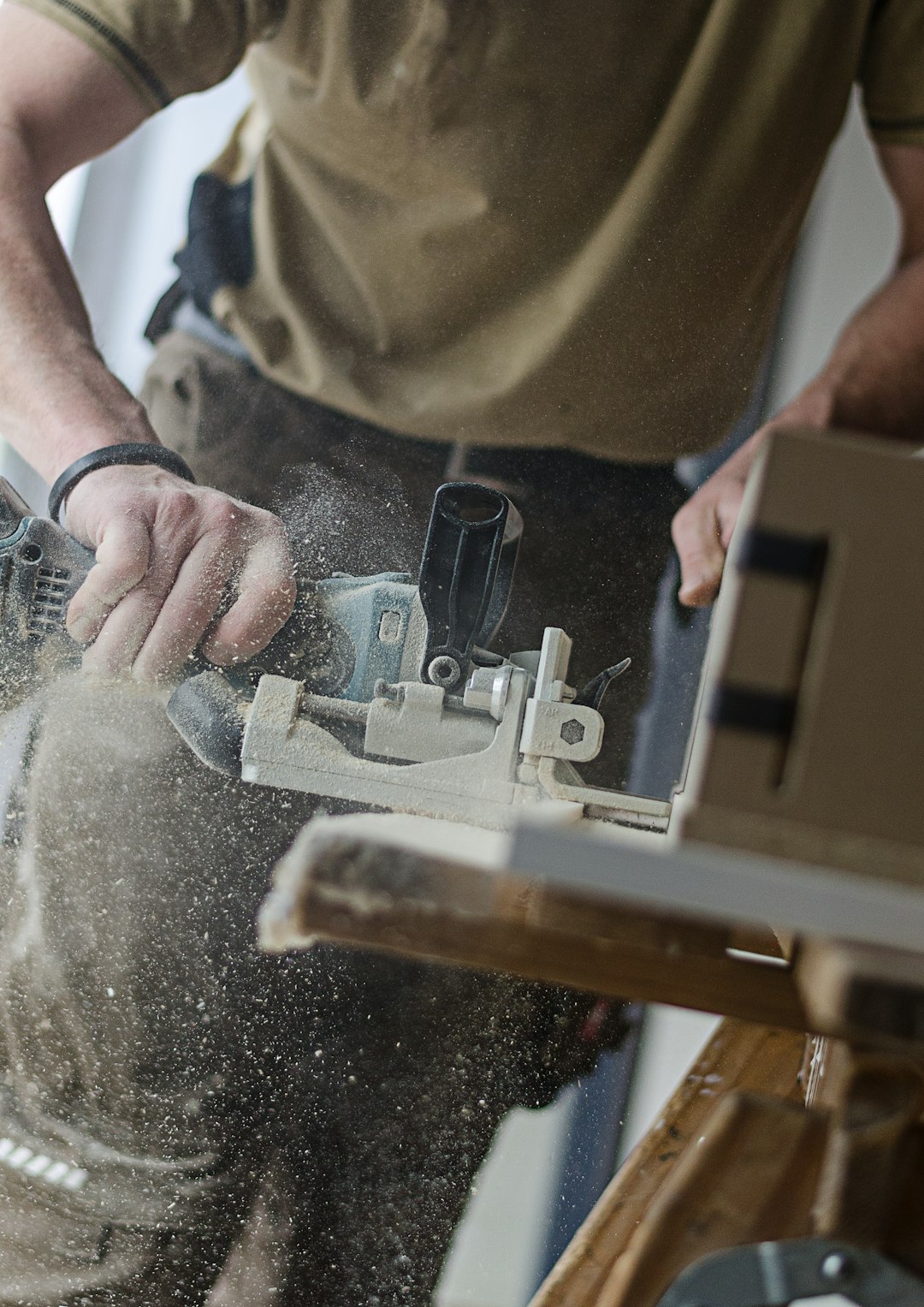
Cutting a tenon using a table saw jig
Cutting Precision Tenons
Table saws excel at cutting tenons for mortise and tenon joinery:
- Mark the tenon dimensions clearly on your workpiece
- Set the blade height to match the shoulder depth
- Position the fence to establish the tenon length
- Make multiple passes with the workpiece on edge until you've removed all waste material
- Test the fit in your mortise and adjust as needed
Safety Enhancements for Precision Work
Safety and precision go hand in hand with table saw work. These accessories will help you achieve both:
Zero-Clearance Inserts
A zero-clearance insert fills the gap around the blade, preventing small offcuts from falling in and providing better support for the wood fibers during cutting. This results in cleaner cuts with less tearout, especially in sheet goods like plywood.
Featherboards
Featherboards apply consistent pressure to hold your workpiece against the fence or table, improving cut accuracy while keeping your hands safely away from the blade. Use them whenever possible for straight cuts.
Sleds and Jigs
A good crosscut sled transforms your table saw's capabilities, allowing for perfectly square crosscuts and opening possibilities for complex joinery. Consider building specialty jigs for operations you perform regularly.
Blade Selection for Perfect Cuts
The right blade makes all the difference in cut quality. For precision work:
- Ripping: 24-30 tooth blade with flat-top grind (FTG)
- Crosscutting: 60-80 tooth blade with alternate top bevel (ATB)
- Sheet goods: 80+ tooth blade with triple chip grind (TCG)
- General purpose: 40-50 tooth combination blade
Invest in quality carbide blades and keep them clean for best results.
Troubleshooting Common Precision Problems
Even with proper setup, you might encounter issues that affect cut quality:
Burn Marks
Caused by: Dull blade, feeding too slowly, misaligned fence
Solution: Replace or sharpen blade, maintain steady feed rate, check fence alignment
Tearout
Caused by: Inadequate support, wrong blade, too aggressive cutting
Solution: Use zero-clearance insert, select appropriate blade, make scoring cuts first
Wavy or Inconsistent Cuts
Caused by: Blade wobble, inconsistent feed rate, wood movement during cut
Solution: Check blade for flatness, maintain steady pressure, use featherboards
Conclusion
Mastering your table saw takes practice, but the precision results are worth the effort. Start with proper setup and alignment, practice fundamental techniques consistently, and gradually incorporate advanced methods as your skills improve. Remember that safety is always the foundation of good woodworking—no cut is worth risking injury.
By implementing these techniques and regularly maintaining your table saw, you'll achieve the kind of precision cuts that distinguish fine woodworking from ordinary results. Your projects will fit together better, look more professional, and stand the test of time.